Singapore: A Cinematic Portrait
a book by Raphaël Millet
About the book
Singapore: A Cinematic Portrait traces how the island has been seen, imagined, and reinvented on screen—from early colonial newsreels to contemporary cinema. Written by Raphaël Millet, the book spans 125 years of film history, shaped by colonialism, decolonisation, and independence, and viewed through local and foreign lenses.
It brings multi-language Asian cinemas into a shared chronology, foregrounding films while addressing archival gaps through rare sources. Framed by the ideas of Nanyang and Nusantara, it reveals a plural, transnational cinema. Since the 1990s, currents of nostalgia and melancholy have reflected the tensions of rapid change, memory, and erasure—capturing a city continually lived, lost, and reimagined through film.

Scroll over the images to find out more about each chapter...
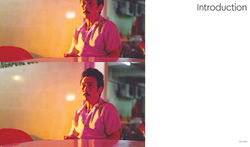
INTRODUCTION Cinema shapes how Singapore remembers itself. Spanning colonial rule to independence, films across languages and traditions cast the city not as backdrop but as a central character—read through Nanyang and Nusantara frames, marked by loss, nostalgia and the pressures of rapid change.
CHAPTER 4: THE POST-WAR CINEMATIC AWAKENING In the aftermath of war, cinema became a space for mourning and recovery. With scarce resources, filmmakers turned to documentaries, re-enactments and recycled footage to reclaim silenced histories. Early films reframed the Occupation through survival and resistance, before fiction returned to explore trauma, diaspora and belonging—culminating in Call of Freedom, echoing a rising anti-colonial awakening.
CHAPTER 8: 1960 SINGAPORE THROUGH THE INDIAN LENS Indian filmmakers never formed a standalone industry in Singapore, but they shaped Malay cinema from within—driving its music, melodrama and rhythm. A rare exception was the Hindi feature Singapore (1960), which cast the city as modern and glamorous, turning local landmarks into a vibrant crossroads between South Asia and Nusantara.
CHAPTER 12: NOSTALGIA SINGAPURA Alongside melancholy, Singapore cinema turned to nostalgia—less about loss than longing. Films reclaim kampongs, HDB corridors, kopitiams and vanished leisure worlds, using places, routines and music to preserve memory, continuity and shared feeling in a city shaped by constant change.
CHAPTER 1: EARLY CINEMA IN SINGAPORE Early cinema in Singapore (1900–1916) emerged through foreign filmmaking rather than a local industry. Western visitors and companies such as Pathé presented the island as spectacle and imperial port, shaping what counted as Singapore on screen. A shift came in 1913, when Gaston Méliès produced early fiction films using local settings and performers, giving Asian actors rare visibility.
CHAPTER 5: THE GRAND STUDIO ERA: FILMING NUSANTARA Post-war Singapore emerged as a Nusantara film hub, launching the Golden Age of Malay cinema. Studios turned moviegoing into a shared cultural ritual, with Malay films rooted in the Archipelago alongside Chinese-language works shaped by Nanyang identities. Shaw's Jalan Ampas powered the boom, rival studios like Cathay-Keris raised the stakes, and genres—from folklore to noir and horror—flourished.
CHAPTER 9: COLD WAR SINGAPORE THROUGH THE WESTERN LENS Western films revived colonial ways of seeing Singapore—through travelogues, official documentaries and “tropical noir.” By the Cold War era, the city became a glamorous zone of spies and intrigue. Despite their agendas, these films now form an accidental archive of streets and everyday life in transition.
CHAPTER 13: FIMING THE SINGAPORE DREAM Cinema exposes the Singapore Dream as a powerful but uneasy myth—shaped by ambition and discipline, yet shadowed by anxiety. As the ideal shifted from stability to the 5Cs, films turned to humour, debt, retrenchment and luck to reveal how the pursuit of security often becomes relentless pressure.
CHAPTER 2: THE INTER-WAR YEARS Between 1916 and 1941, Singapore’s screen culture took shape amid foreign-dominated imagery and emerging local production. While newsreels and fiction films cast the colony as exotic, dangerous, or picturesque, early multilingual works and studio-backed Malay and Chinese productions began to lay the foundations of a home-grown cinema.
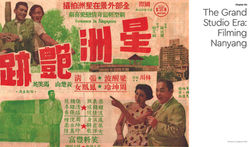
CHAPTER 6: THE GRAND STUDIO ERA: FILMING NANYANG Chinese-language cinema cast Singapore as the imaginative heart of Nanyang—a second homeland shaped by migration and desire. Studios framed the city as modern and hybrid, capturing its streets, bridges and rain-soaked nights. By the 1960s, films like Air Hostess reimagined Singapore as a cosmopolitan Asian crossroads, not just a destination but a waypoint.
CHAPTER 10: A CINEMATIC TRANSITION LOOKING FOR DIRECTION Singapore’s cinema entered a long, uncertain transition shaped by nation-building and the collapse of the old studio order. As kampongs vanished and modernisation accelerated, studio filmmaking fell away, replaced by fragmented independents and uneasy genre experiments searching for a new direction.
CHAPTER 14: FILMING THE SINGAPORE STORY Singapore cinema reworks the “Singapore Story” as both official script and contested ground. From kampong memories of 1965 to popular counter-histories, satire, queer perspectives and National Service films, these works negotiate belonging, contestation and the emotional costs of nationhood.
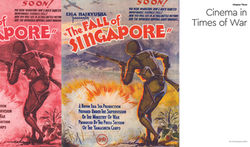
CHAPTER 3: CINEMA IN TIMES OF WAR Renamed Syonan-To, Singapore’s cinemas were seized as tools of imperial control. Film stock was confiscated, screens were supervised, and propaganda replaced artistic life. Filmmaker Hou Yao was killed, Wan Hoi Leng forced into hiding, and projects left unfinished. Japanese newsreels and features recast the island as both prize and stage for empire—films that today reveal as much through silence as spectacle.
CHAPTER 7: THE GRAND STUDIO ERA: SINGAPORE’S CINEMATIC MALAYAN TOUCH A small but charged Chinese-language wave sought to “Malayanise” cinema—rooting stories, language and faces in local life. Films like Door of Prosperity and The Lion City brought recognisable streets, public housing and everyday labour to the screen, aligning cinema with a new, shared Malayan identity.
CHAPTER 11: MELANCHOLIA SINGAPURA Economic changes and rapid redevelopment gave rise to a darker, melancholic cinema. Films turned away from civic polish to confront loss, marginal lives and urban isolation—Mee Pok Man marking the breakthrough, followed by works that framed HDB corridors, youth drift and cultural tension as signs of modernity’s emotional cost.
CONCLUSION Singapore’s film history unfolds as a cumulative portrait rather than a single image. Across eras and languages, films record change, rework memory and balance official narratives with alternative views—shaped by recurring places, faces and performances that carry the nation’s image beyond the screen.
Book Excerpts
 |  |  |  |
|---|---|---|---|
 |  |  |  |
 |  |  |  |
 |  |  |  |
 |  |  |
Published by:

Supported by:

Hong Leong Foundation & Lee Foundation